Starmer’s vacillations on Iran have left Britain immeasurably weaker

Tehran’s posture towards this country is not benign indifference; it is calculated antagonism
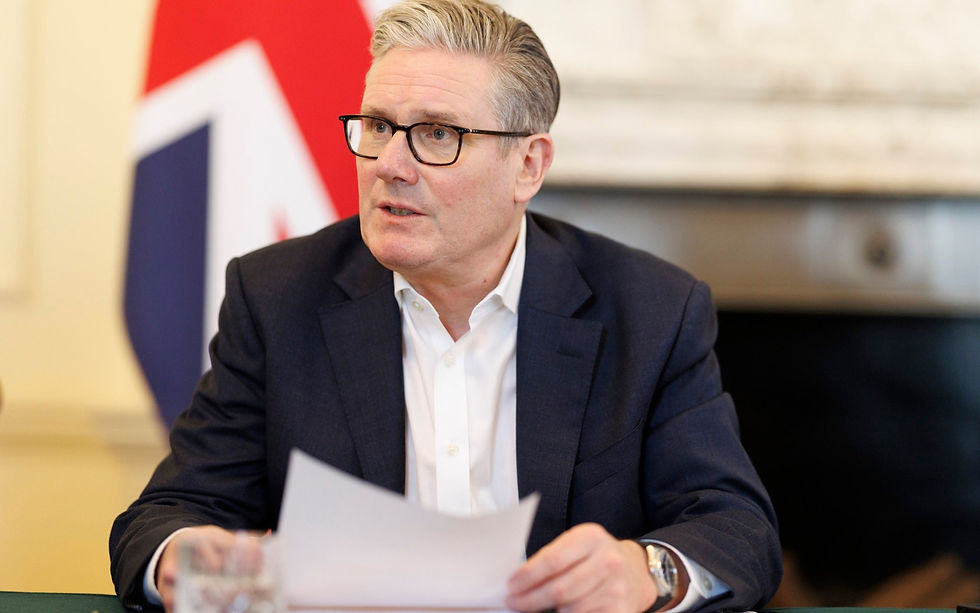
The age of complacency is over. Peace cannot be assumed Credit: Simon Dawson /No 10 Downing Street
There are moments in international affairs when the fog clears and the outlines of the age reveal themselves. This is one of them. In what may come to be judged a defining episode of our geopolitical settlement, the question is not what Tehran or Jerusalem has done, nor even what Washington has risked. The question is simpler, and more uncomfortable: where was Britain?
In a word: missing. Not merely cautious, nor prudently reserved, but conspicuously absent. When moral seriousness was demanded, when allies looked for clarity rather than choreography, Starmer chose instead to peer anxiously over his shoulder at his own backbenches. Leadership was required; equivocation was supplied.
The refusal to support the United States in the use of our own military bases will not be read abroad as subtle statecraft. It will be read as unreliability. Likewise, the continued failure to proscribe the Islamic Revolutionary Guard Corps (IRGC), even when the opportunity and the evidence were plainly present, looks less like prudence and more like paralysis.
Once again, we rely upon America to do the hard, unfashionable work of defending the West, while we issue carefully balanced statements about “de-escalation”.
The familiar chorus has already assembled to condemn the American and Israeli strikes as unlawful, and to plead for further rounds of negotiation. This argument collapses on contact with reality.
For years, the Iranian regime has waged a sustained campaign against Israel: directly and through its proxies. It does not conceal its intentions; it has enshrined its hostility in its own constitution. Israel has not, since October 7, been engaged in a narrow campaign against “merely” Hamas. It has faced coordinated pressure across multiple fronts: Hezbollah to the north, the Houthis to the south, Islamic Jihad and other militias in the shadows – all resourced, trained, financed, and directed by the IRGC. Iran is the head of the snake.
Under international law, the right to self-defence is a living principle. A state subjected to sustained attack is entitled to act. Israel is within that right. The United States, in supporting an ally under siege, is likewise within its own legal and moral bounds.
Others protest that Britain has no direct stake; that there is no immediate threat to our streets, and that we have no appetite for foreign entanglements. This is ignorant.
As Home Secretary, I saw at close quarters the nature of the Iranian threat to the United Kingdom. The Director General of MI5 publicly identified Iran as a major security concern, detailing more than 20 potentially lethal Iran-backed plots within a single year, alongside a sharp rise in state-threat investigations. Transnational repression, intimidation, and assassination-style conspiracies are not theoretical abstractions. This is no dodgy dossier; this is hard fact.
The British public is, mercifully, insulated from much of this. But the absence of visible chaos is not the absence of hostility. Tehran’s posture towards this country is not benign indifference; it is calculated antagonism. In strategic terms, Iran has long since crossed the threshold from nuisance to adversary.
And yet our response has been marked by drift. The previous Conservative administration had the chance to proscribe the IRGC and refused, indefensibly. Now Labour, despite inheriting both the evidence and the legal architecture in the form of the
National Security Act, has done nothing.
We flatter ourselves that Britain remains a pivotal power, a serious nation with global reach. But seriousness requires decisions that are occasionally unpopular and often uncomfortable. It requires recognising that the world is hardening into blocs once more. On one side stand autocracies: Russia, China, Iran, North Korea, increasingly coordinated, increasingly assertive, united less by ideology than by contempt for liberal democracy. On the other stand the democracies: fractious, self-doubting, but still possessed of immense economic, military and moral weight.
For some time, it has not been obvious which of these camps would shape the coming decades. An expansionist Russia in Ukraine, an emboldened China in the Indo-Pacific, and an Iranian regime projecting violence across the Middle East have given the autocratic axis an air of momentum. Yet the recent firmness shown by democratic allies offers a sliver of reassurance.
The question for Britain is whether we intend to count ourselves among them in deed as well as in rhetoric. We can continue to hedge, to triangulate, to hope that geography and nostalgia will sustain our influence. Or we can accept that alliances require solidarity, that deterrence requires resolve, and that moral clarity is not a liability but an asset.
The age of complacency is over. Peace cannot be assumed. Thucydides captured the truth with unforgiving clarity: “the strong do what they can and the weak suffer what they must”. As the global balance shifts and rival powers test the boundaries of the possible, Britain confronts a simple, uncomfortable choice. Strength – in arms, in industry, in resolve – or weakness that comes from assuming others will defend us.
History will not pause while we deliberate.
Suella


